What Is Matched Betting? A Beginner's Guide (2026)
Matched betting is a technique that turns bookmaker free-bet promotions into cash. You place a normal bet at a bookmaker (the back) and an opposing bet at a betting exchange (the lay). The variance of the underlying event mostly cancels out, and the bulk of the free bet's face value lands as profit. It is widely used in the UK, completely legal, and tax-free.
It sounds too good to be true the first time you hear it. Most beginner guides lean into that and oversell. This one tries the other way: explain what actually happens, in concrete terms.
Summary
- Matched betting uses bookmaker free-bet promotions to extract cash, by covering both possible outcomes of a sporting event with two opposing bets at a bookmaker and a betting exchange.
- It is completely legal in the UK and the profits are tax-free for the punter.
- A standard sign-up offer typically returns ~£7–£8 from a £10 free bet at sensible odds.
- Typical members report extracting £500–£1,000 across the full set of UK welcome bonuses, then £150–£350 a month from ongoing reload offers.
- You need a current account, a betting exchange account (Smarkets or Betfair), an oddsmatcher, and a calculator.
- It takes 30–60 minutes a day once the sign-up phase is finished, and no prior knowledge of sport.
How matched betting works
A back bet is a bet for something to happen, like Manchester City to win or the favourite to place. Every bet you've ever placed at a bookmaker is a back bet.
A lay bet is a bet against something happening, like Manchester City not to win. You place lay bets at a betting exchange (Smarkets or Betfair are the standard UK options), where you're effectively the bookmaker. If Manchester City lose or draw, the lay wins. If they win, it loses. Our beginner's lay-betting guide walks through a real qualifying bet step by step if this is the first one you've come across.
The central idea is this: a free bet has positive expected value if you can lock in its face value regardless of the result. By backing a selection at a bookmaker (using their free bet) and laying the same selection at an exchange, you cover both sides. Almost no matter what happens on the pitch, the same amount lands in your bank account.
It's completely legal in the UK. The Gambling Commission regulates the bookmakers and exchanges, not the people using their products.
Back and lay: the two-bet structure
The back bet sits at a bookmaker. In the UK that's Bet365, William Hill, Sky Bet, Paddy Power and the dozens of other operators who advertise welcome bonuses. The bookmaker decides the odds and pays out if your selection wins.
The lay bet sits at an exchange. The two main UK options are Smarkets and Betfair. The exchange takes a small commission on winning bets, lets you set your own lay odds, and shows you the lay stake required to cover any back bet.
The maths sounds intimidating but isn't. A calculator works out the lay stake for you. Punch in the back stake, back odds, lay odds and exchange commission, and it returns a single number.
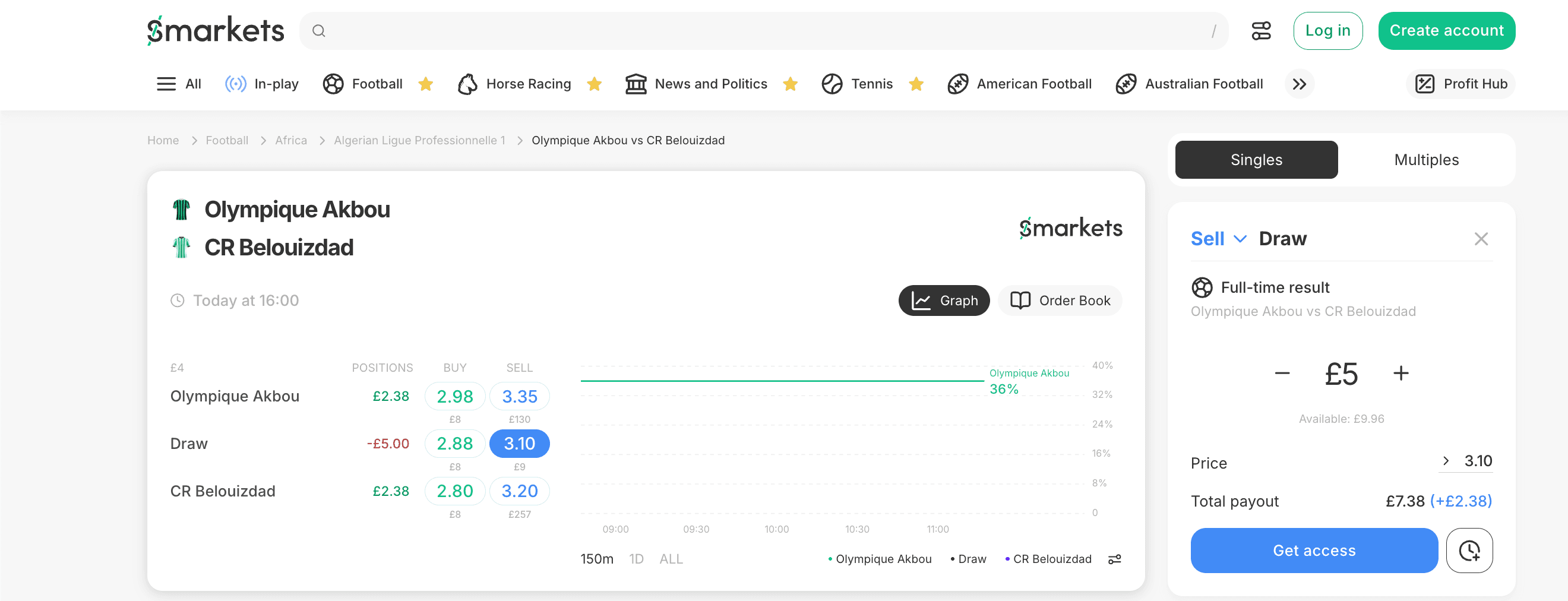
Smarkets exchange interface placing a lay bet at 3.10 odds with the calculated lay stake and liability visible
The exchange holds the worst-case loss (called the liability) while the bet is open, and releases it once the event settles. That's why an exchange account needs more headroom than a bookmaker account. Plan for £100–£200 sitting in the exchange to start with.
A worked example: a £10 free bet
Most UK welcome offers ask you to place a real-money qualifying bet first, then issue a free bet of equal size. Bet £10, get £10 free is the standard. Here's how that plays out across both legs.
The qualifying leg. You back £10 on a selection at the bookmaker at odds around 3.0, and lay the same selection at the exchange at odds close to 3.0 (3.05 or 3.10 is typical). The standard matched betting calculator returns the lay stake (about £9.78 here) and the qualifying loss (roughly £0.30). Whatever happens on the pitch, you finish the leg about 30p down. The bookmaker's free bet drops into your account.
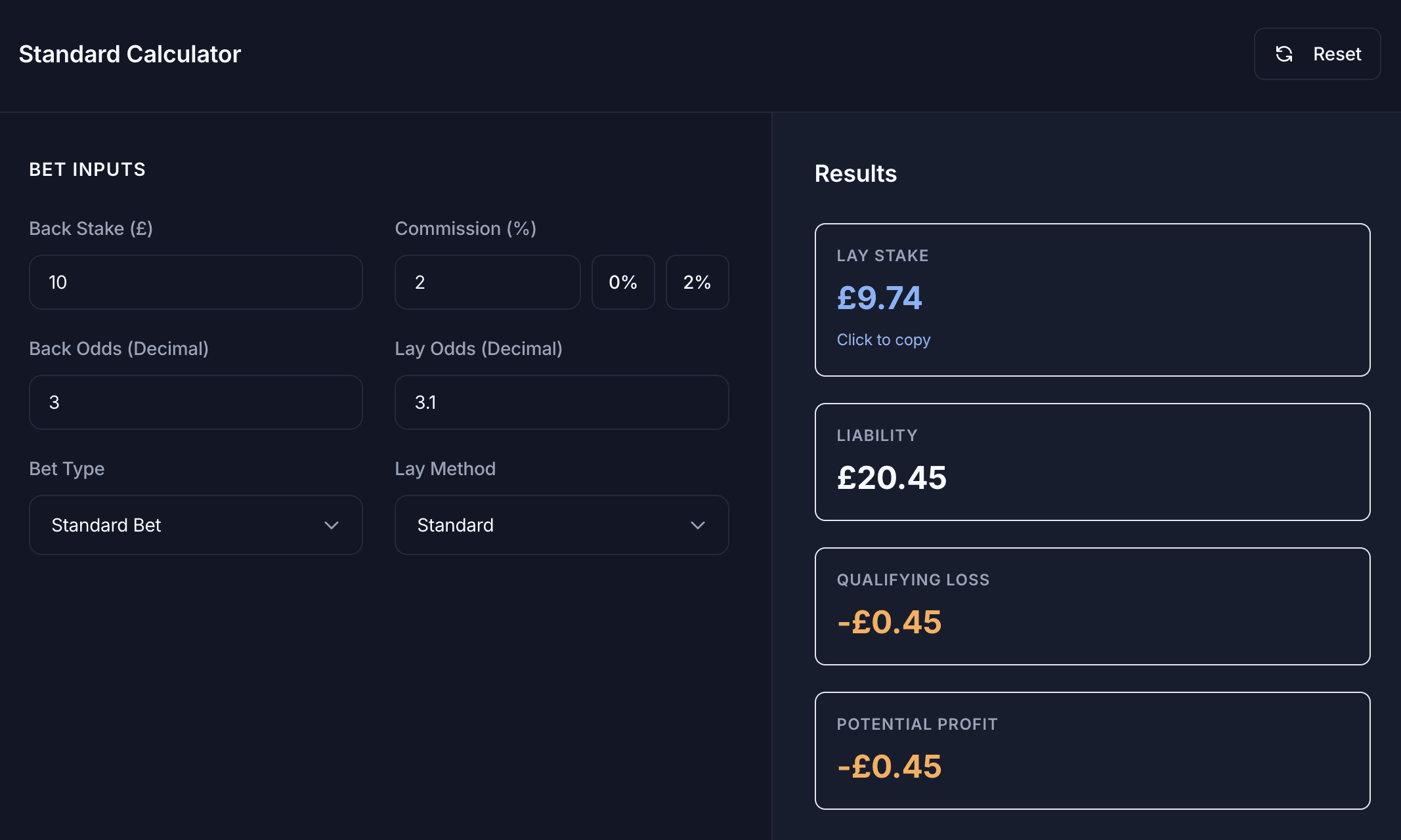
Better Bet standard matched betting calculator showing the lay stake and qualifying loss for a £10 back bet at 3.0 odds
The free-bet leg. Free bets are usually "stake not returned" (SNR), which means you keep the winnings but not the original stake. You back the free bet on a selection at higher odds (5.0 or 6.0 is typical) and lay the same selection at the exchange. The bonus / SNR calculator sizes the lay stake so the result cancels close to evenly across the two outcomes. The output for a £10 free bet at sensible odds is around £7.50–£8.00 net, win or lose.
The total. Net of the qualifying loss, that's roughly £7–£8 of cash from a single £10 welcome offer. Different offer shapes (each-way refunds, accumulator boosts, casino bonuses) need different calculator modes, which is why we run the rest of our calculators rather than just one.
Where the protection comes from
Two opposing bets cover the two states of the world. A back bet wins when an outcome happens; a lay bet wins when it doesn't. Stake them in the right ratio and the combined position barely moves with the result. The expected loss on the qualifying leg is the small spread between back and lay odds, typically 1–3% of the stake. The free-bet leg's expected gain is the free bet's face value minus a similar spread.
Typical members report extracting roughly 70–85% of each free bet's face value as net profit. A £10 SNR free bet at sensible odds turns into about £7–£8; a £25 free bet into £18–£21; a £100 enhanced-odds offer into £60–£80, depending on the qualifying terms.
The "typical members report" framing matters. The maths is consistent across offers, but each offer carries its own small spread, and a sloppy click can wipe out a single offer's profit.
What you need to start
You don't need much.
- A current account or e-wallet for the deposits and withdrawals. A separate account from your day-to-day banking is sensible (see "common mistakes" below).
- A betting exchange account. Smarkets and Betfair are the standard pairing. Smarkets has lower commission for newer accounts; Betfair has deeper liquidity.
- An oddsmatcher, software that scans every bookmaker market against the matching exchange market. The oddsmatcher is the tool you'll spend most time in.
- A calculator to size the lay stake on each bet. The full calculator set covers standard, free-bet, each-way and casino offer types.
- A profit tracker (optional) so you can see where the time pays back. We bundle one with the rest of the toolkit.
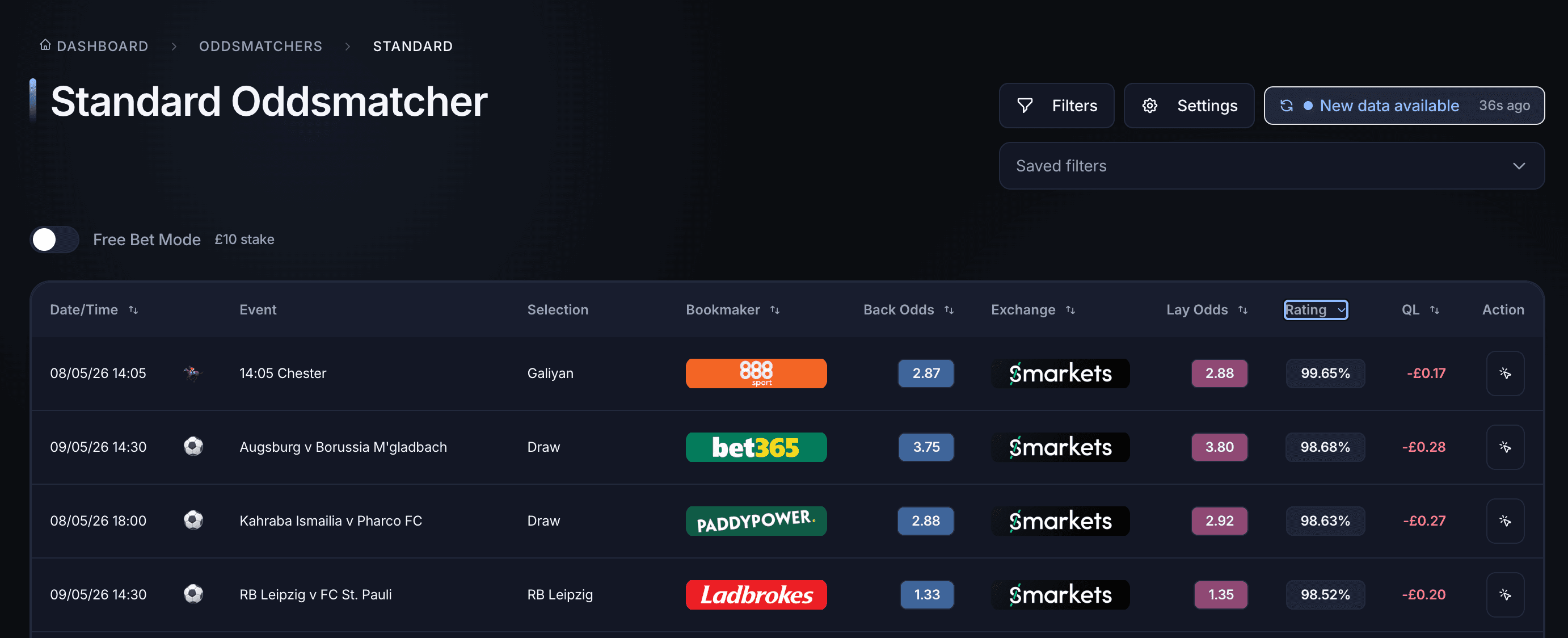
Better Bet standard oddsmatcher showing today's top matched betting opportunities sorted by rating
A working bank of £100–£200 is enough to start. The exchange holds the liability, so a single £10 sign-up offer ties up around £40, and the same money cycles round each subsequent offer. The tutorial walks you through your first two real offers without a payment card.
From sign-up offers to reload offers
The sign-up phase is where most of the early money sits. There are roughly 25–30 large UK bookmaker welcome bonuses live at any given time, and typical members report extracting £500–£1,000 across the full set, depending on which offers are running and how careful you are with the qualifying bets. Today's sign-up offers lists what's live this week, and our free bets pillar covers the SNR/SR mechanics that drive each one's actual value.
After the welcome rush, the income shifts to reload offers: money-back specials, enhanced odds, accumulator boosts and casino reloads that bookmakers push to existing customers. Volume is lower but it never stops. Typical members report £150–£350 per month from reloads at 30–60 minutes a day. Current reload offers is updated daily. Year-round structural promotions like Best Odds Guaranteed on horse racing sit alongside the reloads, and produce a small edge without needing a free bet at all.
And yes, it's all tax-free. HMRC treats matched-betting profits as gambling winnings: no Income Tax, no National Insurance, nothing to declare on a Self Assessment return. The detail (why the £1,000 trading allowance doesn't apply, why frequent bookmaker activity can flag with mortgage underwriters) sits in our tax guide.
Common mistakes beginners make
The five most common ways the maths goes wrong, from the support tickets we see most often.
-
Placing the lay bet after the back bet has settled. Both bets need to be live before the event starts. If the back bet kicks off before you've laid it, you're exposed to the result with no cover.
-
Mismatched market scope. Backing "Team A to win" at the bookmaker against laying "Team A in 90 minutes" at the exchange is a common trap. The bookmaker's market may include extra time; the exchange's may not. Always check the two markets cover the same event timeframe.
-
Not using a separate bank account. Mortgage underwriters look at three to six months of statements, and a steady drumbeat of bookmaker deposits stands out, even though the income is legal and tax-free. The mortgage section of our tax-free post has the detail.
-
Free-bet expiry. Most free bets expire seven days after they're issued. A free bet earned on Saturday is usually gone by Wednesday. Use it on the next sensible offer rather than holding out for a perfect one.
-
Over-betting the bank. The exchange holds the worst-case loss as liability while the bet is open. Stake too aggressively and the exchange runs out of cash for the next offer. Keep £100–£200 of headroom.
When I started in 2022, I made the lay-after-the-back mistake on my second-ever offer. The match kicked off, my back bet lost, and I scrambled to lay an exchange bet that no longer existed. I lost the qualifying stake outright. Now I open both tabs side by side, place the back bet, and immediately place the lay before doing anything else.
Some bookmakers gub faster than others. Our Gubbing & Value Index ranks each UK bookmaker on welcome offer value, reload frequency, reliability, and gubbing risk. Pick the high-GVI bookmakers first if you want longer account lifetimes.
Matched betting is for adults aged 18 and over. If gambling stops feeling fun, free confidential support is available at GambleAware.
Frequently asked questions
Is matched betting really legal?
Yes. It uses promotions advertised by Gambling Commission-licensed operators, breaks no UK law, and no recreational matched bettor has ever been prosecuted for it. Our matched betting legality guide covers the regulatory detail, including the named ASA rulings.
Do I need to know anything about sport?
No. The oddsmatcher picks the markets that have the best back/lay match for each offer, and you can place a bet on any of them without knowing the teams or runners. People who follow sport sometimes find it harder, because they're tempted to second-guess the maths.
How much can a beginner make in their first month?
Typical members report extracting £200–£500 in their first month, mostly from sign-up offers. Some clear the welcome phase in three weeks; some take two months around a busy job. It's a reasonable expectation, not a target.
Do I need a lot of money to start?
No. A £100–£200 working bank is enough to clear the first set of sign-up offers, because both bets settle within a day and the money cycles round.
Will the bookmaker close my account?
Eventually, possibly. Bookmakers can restrict or close accounts they decide are unprofitable. The community calls it "getting gubbed". It's a commercial decision under their T&Cs, not a legal one. Our matched betting legality guide has the short version.
The practical takeaway
Matched betting is a structurally simple technique once the maths is offloaded to a calculator. Bookmakers publish the offers; exchanges price the lay side; you click the back, copy the lay stake, click the lay, and wait for the event to settle. The compounding bit (sign-ups to reloads to a steady tax-free income) is what turns it from a curiosity into a side hustle.
If you've not started yet, the tutorial takes you through two real offers without payment details, and most members have around £40 in their bank account by the end. From there, the oddsmatcher finds the offers worth your time and the calculators size every lay stake.