Is Matched Betting Tax Free in the UK? (2026 HMRC Guide)
Yes. Matched betting is tax free in the UK. HMRC treats the profits as gambling winnings, which means no Income Tax, no National Insurance, and nothing to declare on a Self Assessment return.
There are still three things people regularly get wrong about this, though, so it's worth spending five minutes on the detail before you assume you're sorted.
Summary
- Matched betting profits are tax-free for the punter, because HMRC charges the bookmakers, not you.
- You don't need to declare your matched betting on a Self Assessment return.
- The £1,000 Trading Allowance does not apply to matched betting, because gambling profits aren't trading income.
- Universal Credit is usually unaffected, but the savings and capital limits can still bite if your bank balance climbs.
- Mortgages are the awkward one: frequent bookmaker transactions can flag with underwriters even though the income is legitimate.
- Pound for pound, every £100 you make from matched betting is worth more than £100 earned through PAYE. The worked example below shows why.
It's an unusually friendly tax position compared with almost any other side hustle. That's the upside. The detail below is the small print.
What HMRC actually says
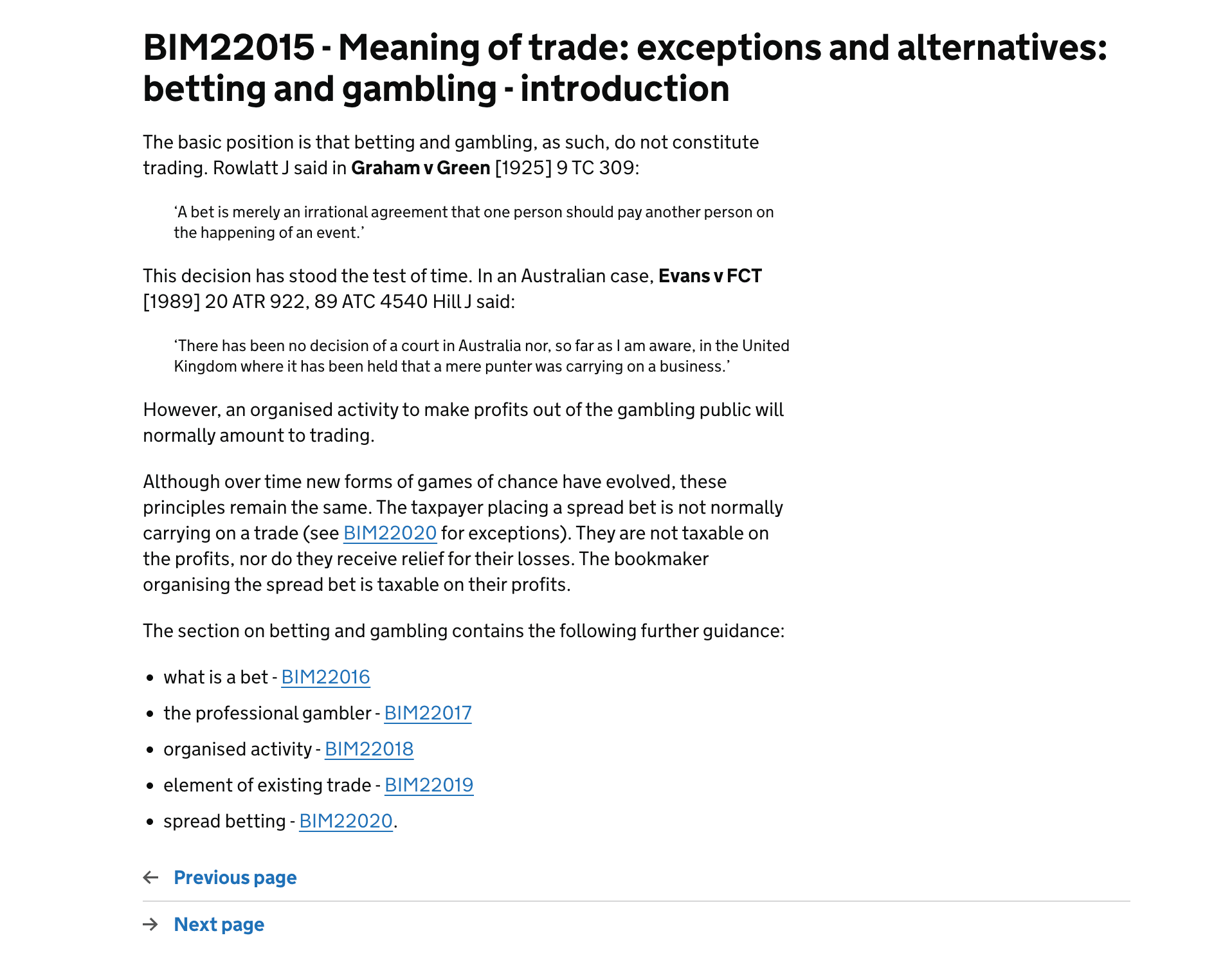
HMRC Business Income Manual BIM22015 page on gov.uk confirming gambling profits are not taxable for the punter
The clearest official statement comes from HMRC's own Business Income Manual, page BIM22015. It says punters "are not taxable on the profits, nor do they receive relief for their losses." That single line is the basis for everything else in this article.
The duty exists, but it's charged at the other end of the transaction. General Betting Duty on gov.uk confirms it's the bookmaker who pays, calculated on their net stake receipts. The customer is left out of it entirely. This has been the structure since 2001, when the chancellor moved gambling duty off the punter and onto the operator. Bookmakers built their margins around that change, and it hasn't been touched since.
So when people say UK gambling is "tax-free", what they mean is that the tax is collected before you ever see the money. It's already priced into the bookmaker's odds. That's true of horse-racing tickets, casino spins, lottery wins, sports bets, and matched betting alike.
How matched betting profits are treated for tax
Matched betting sits inside the same HMRC bucket as any other gambling activity. It's not employment income. It's not self-employment income. It's not investment income. It's gambling winnings, full stop.
That matters because each of those categories has its own tax treatment, and gambling winnings are the only one where the answer is "nothing to do." You don't need a UTR. You don't need to register as self-employed. You don't need to keep a structured set of accounts for HMRC's benefit.
You should still keep your own records, partly so you know how you're doing, partly because lenders and accountants sometimes ask. But that's bookkeeping for you, not paperwork for HMRC.
I started matched betting in 2022 to top up my freelance writing income, and I genuinely nearly added the year's profits to my Self Assessment return out of caution. I couldn't find a clear, named explainer that said "no, you don't". Most posts hedged. Two hours of digging through the HMRC manual later I realised they were hedging because the topic sounds like it should be taxable. It isn't.
Why the £1,000 Trading Allowance doesn't apply
This is the misconception I see most often, and the one most other guides muddle.
The £1,000 Trading Allowance is a tax break for casual self-employment income, like selling crafts on Etsy or doing the odd freelance gig. If you earn under £1,000 from a side hustle, you don't need to declare it.
Plenty of people glance at that, look at their first year of matched betting, and think "great, I'm under the £1,000 threshold so I'm fine." They are fine, but for the wrong reason.
Matched betting profits aren't trading income at all. The Trading Allowance never enters the picture, whether you make £50 a year or £15,000 a year. There's no threshold. The whole framing doesn't apply, because gambling winnings aren't classed as a trade by HMRC's own manual. If you're under £1,000, you're not exempt because of the allowance. You're outside the tax system on this income entirely.
So you don't lose anything by going over £1,000. Some people genuinely worry about this. You don't need to.
The answer doesn't change with the offer type either. A £30 free bet routed through the bonus calculator, an each-way refund handled with one of our other matched betting calculators, and a casino sign-up bonus all sit in the same gambling-winnings bucket. Our free bets explainer covers why SNR free bets convert at ~77% of face value and SR at ~95%, if you want the mechanics behind the numbers.
Worked example: matched betting £200 vs PAYE £200
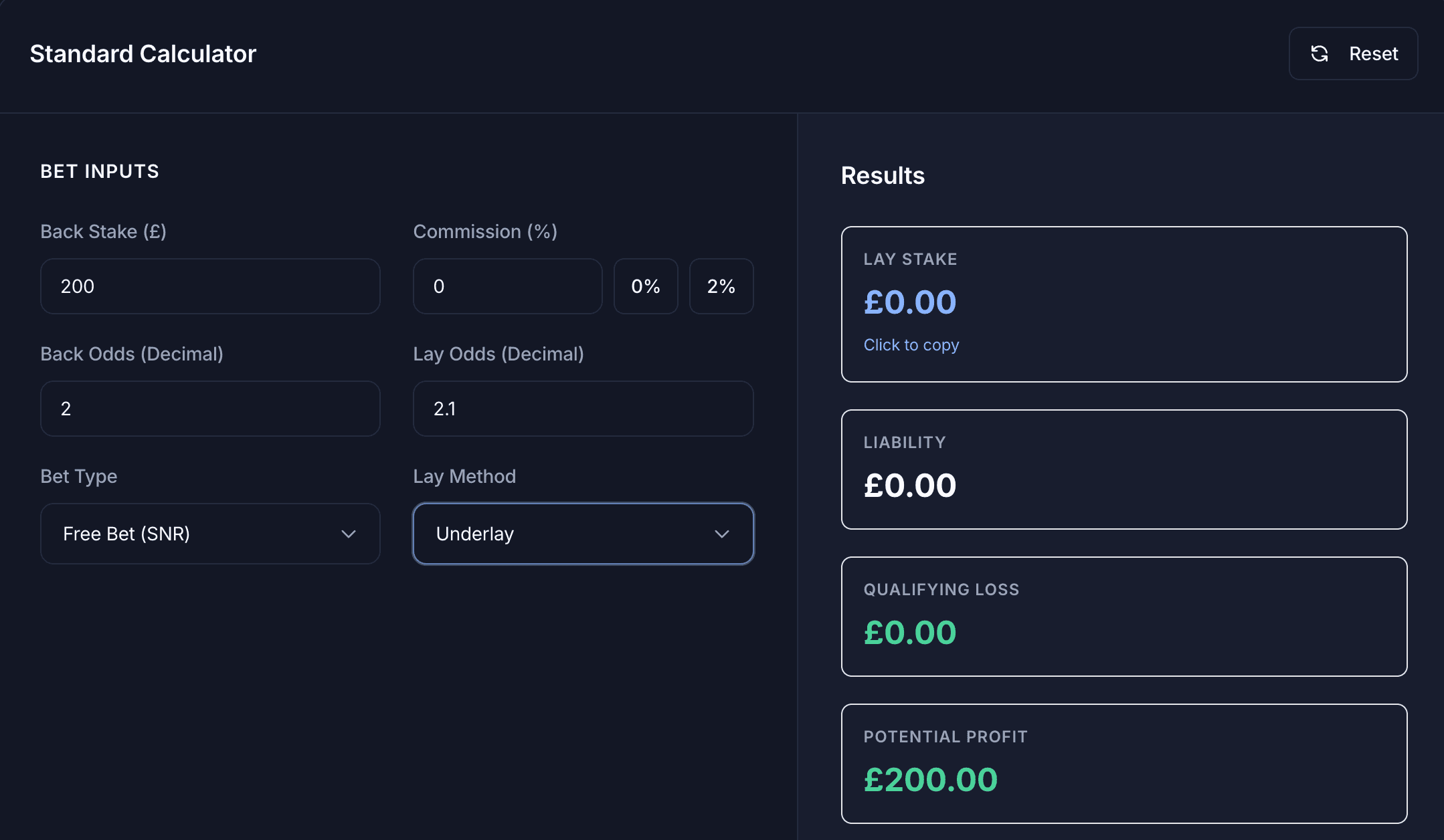
Better Bet calculator showing £200 net profit from a matched bet, used in the post-tax comparison with PAYE earnings
Here's the comparison that makes the value visible. Suppose you've earned £200 from a fortnight of matched betting using our standard matched betting calculator on each offer. How does that compare with earning £200 from a part-time job?
Assume basic-rate PAYE, the 2025/26 personal allowance is already used up by your main job, and the standard 20% Income Tax + 8% employee National Insurance applies on the next £200.
| Source of £200 | Tax + NI taken | Cash in your hand |
|---|---|---|
| Matched betting | £0 | £200 |
| PAYE (basic rate) | £40 Income Tax + £16 NI = £56 | £144 |
Two weeks of matched betting at £200 leaves you with £200. Two weeks earning £200 from a side job leaves you with £144. To net £200 from PAYE you'd need to earn around £278 gross.
Across a year that gap compounds. £200 a fortnight from matched betting is around £5,200 a year, kept in full. To match it through PAYE at the same tax band you'd need a side job paying around £7,222 gross. That's the part of matched betting that doesn't get talked about often: the tax treatment quietly inflates the value of every pound by ~38%.
Most members get there by stacking sign-up offers first and then settling into a weekly rhythm of reload offers, where the tax-free compounding does the heavy lifting.
Universal Credit, benefits and savings
This is the section where I have to be careful, because everyone's claim is different and I'm not your benefits adviser.
Two general principles, though.
Income. Matched betting profits aren't earned income for Universal Credit purposes. They aren't from employment or self-employment, so they don't show up in the earnings calculation that taper-reduces your award. That's the helpful bit.
Capital. What does matter is the savings and capital you accumulate. Universal Credit has a £6,000 lower limit (below which capital is ignored) and a £16,000 upper limit (above which you stop being eligible). If matched betting builds your bank balance past these thresholds, the rules apply the same way they would for any other money: your award reduces, then ends.
The practical version: keep an eye on the running balance, not the income. If your matched betting bank account drifts past £6,000, that's the trigger to do a careful read of the rules at Citizens Advice's benefits guide or talk to a benefits adviser. Don't take my paragraph here as the final word. Claims and circumstances vary, and the rules update.
Mortgages and bank accounts
Tax-free isn't quite the same as invisible. The single most-asked follow-up question I get from members on Cluster 11 topics is about mortgage applications, and it's a fair worry.
Underwriters look at three to six months of bank statements. They are trained to spot patterns, and a steady drumbeat of bookmaker deposits and exchange withdrawals is a pattern. It doesn't matter that the net is positive. To an underwriter, frequent bookmaker activity raises a question, even though the income behind it is legal, tax-free, and provable.
Two practical mitigations help.
The first is a separate bank account. If your matched betting flows through its own current account (Starling, Monzo, Chase, anything that's not your main day-to-day account), your primary statements stay clean. Lenders only ask for the accounts you list.
The second is honesty. If you're asked about the bookmaker activity directly, the answer is "I do matched betting, profits are tax-free in the UK per HMRC, here's the audit trail." Brokers are used to this and most lenders don't blink. The ones who do blink would have blinked at any unusual statement; better to know early.
The bookmaker hub pages include reliability notes for each major UK bookmaker, useful when deciding which to keep on your statements.
What about other countries?
The UK is unusually generous on this. Most countries either tax gambling winnings as income (Germany, France, the Netherlands above certain thresholds, and others) or expect them declared and assessed. Ireland is similar to the UK; the US, Canada and Australia are not.
If you live outside the UK, this article doesn't apply to you and you should check your local rules before relying on the British answer.
Frequently asked questions
Do I have to declare matched betting on my Self Assessment?
No. Gambling winnings aren't taxable income, so there's no box on the Self Assessment return for them. If you already file Self Assessment for other reasons (freelance work, rental income, dividends), your matched betting profits don't go on the return at all.
What if HMRC asks where the money came from?
Be straight about it. Bank statements showing transfers to and from bookmakers and a betting exchange are the audit trail. Matched betting is legal and the profits are tax-free, so there's nothing to hide. If you ever need to write a brief explanation, "matched betting (gambling winnings, not taxable per HMRC's BIM22015)" covers it in one line.
Does this change if I do matched betting "professionally"?
In practice, no. There's no UK case where a recreational matched bettor has been assessed as carrying on a trade. The activity is structurally a series of bets, and bets aren't a trade.
HMRC's own manual reserves the "professional gambler" carve-out for organised activity that profits from the gambling public, which is what bookmakers and bet brokers do, not what punters do. If you're earning a comfortable living from matched betting, you're still a punter from HMRC's point of view.
Does matched betting count as income for a credit application?
It depends on the lender. Some treat it as supplementary income if the audit trail is clean and consistent. Some don't recognise it at all. Bank statements will show the activity either way, so transparency works better than trying to hide it. If you're applying for a mortgage in the next year, that's the moment to lean on the separate-account approach in the section above.
Does winning a big single bet change anything?
No. There's no threshold. £20 from a free-bet conversion and £2,000 from a Sky Bet Price Boost are both tax-free in exactly the same way.
The practical takeaway
Tax-free profit is one of the things that quietly makes matched betting unusually friendly compared with most side hustles. The detail above is the small print, and it's worth knowing. But the headline answer is "yes, it's tax-free" with no real caveats for almost everyone reading this.
If you've not started yet, our matched betting beginner guide covers the technique itself, our matched betting legality guide covers the regulatory side, today's sign-up offers lists what bookmakers are currently running, and the tutorial walks you through two real ones. Most members have around £40 in their bank account by the end, and yes, all of it is yours to keep. Once you're past the basics, our oddsmatcher is what finds the offers worth your time.