A beginner's primer: race types, racecards, SP/BOG, non-runners & Rule 4, plus key terms.
Racing runs every day with lots of markets and regular promotions. That means plenty of close matches for qualifiers and frequent reload offers (refunds, BOG, extra places, and more).
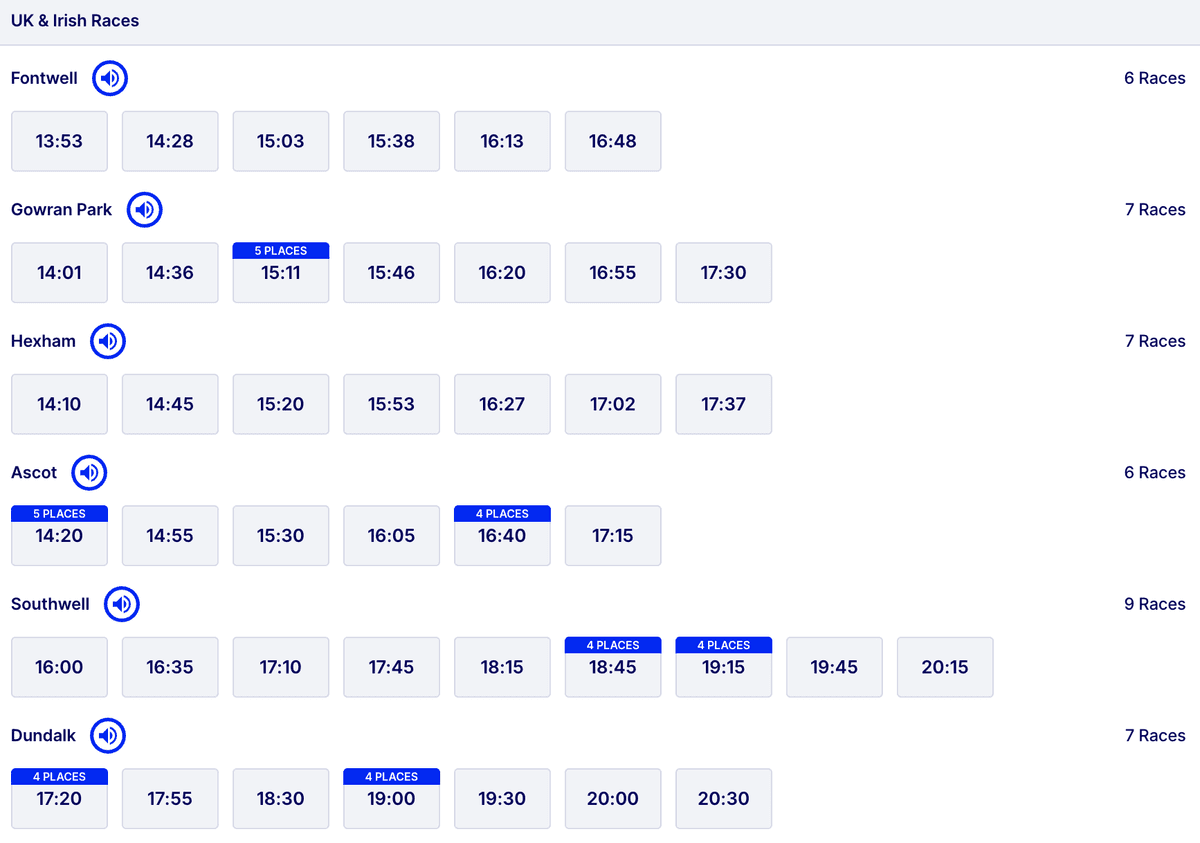
• Flat racing: no obstacles; typically spring/summer; distances from 5f up to about 2m4f.
• National Hunt: races with obstacles through autumn-spring:
- Hurdles: lower, flexible obstacles.
- Steeplechase: higher fences, can include ditches/water.
• Bumpers (NH Flat): National Hunt races with no obstacles, used to give inexperienced horses a run.
Key details: course, off time, runners, going (ground conditions), distance, class/grade, and for handicaps the weights carried. On flat turf sprints you may also see ‘draw’ (stall number).
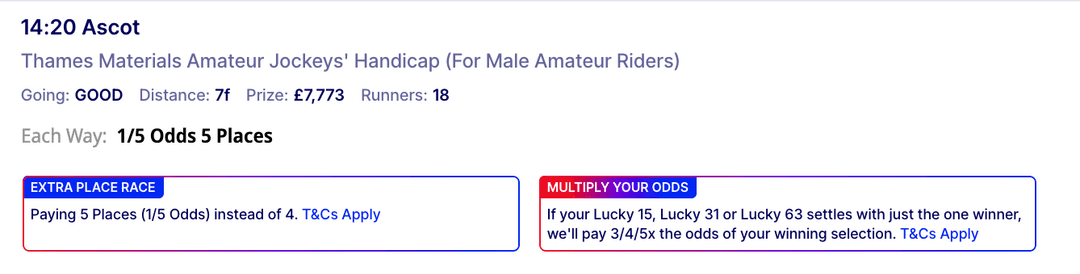
Fixed odds can move before the off. The ‘Starting Price’ (SP) is the odds for that horse at the exact time the race starts. Some bookmakers offer BOG: if you back at fixed odds and the SP is bigger, they pay at SP if your horse wins.
If a horse is declared a non-runner (NR), fewer runners usually means reduced odds on those remaining. Bookmakers apply a ‘Rule 4’ reduction to winning returns based on the withdrawn horse’s price. Some markets are NRNB (Non-Runner No Bet), which voids your stake if your pick doesn’t run.
A dead heat is a tie that can’t be split by photo finish. Bookmakers divide winnings by the number of tied horses (your stake may be split). Exchanges follow their own dead-heat rules, so your back and lay should balance overall.
• Win: back the horse to win the race.
• Each Way (EW): two bets (win + place). We cover EW (and extra places) in the next guides.